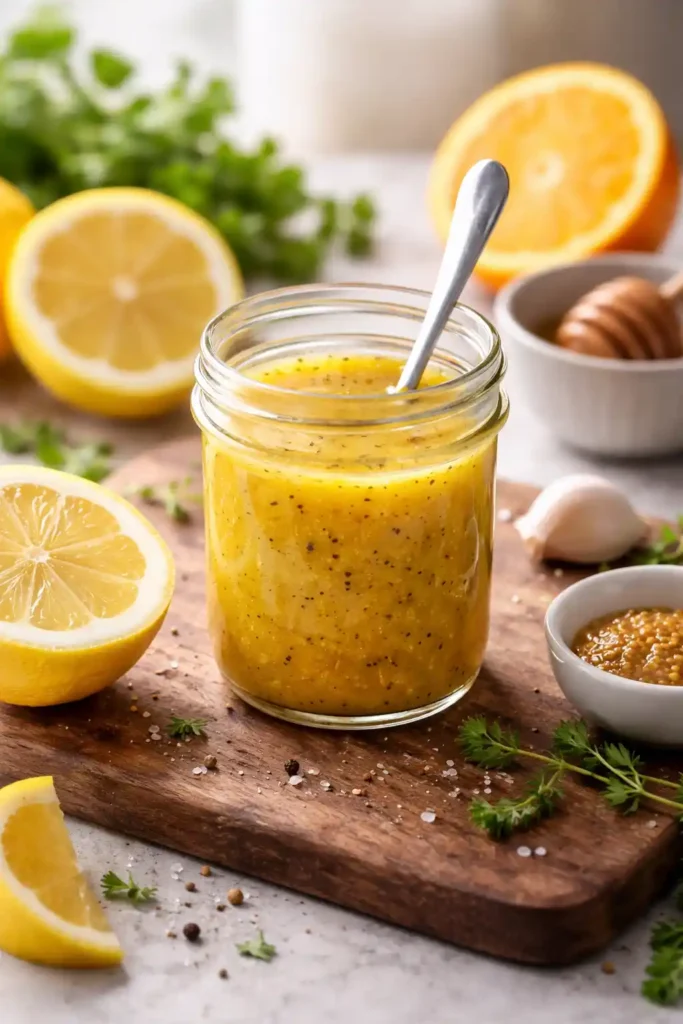
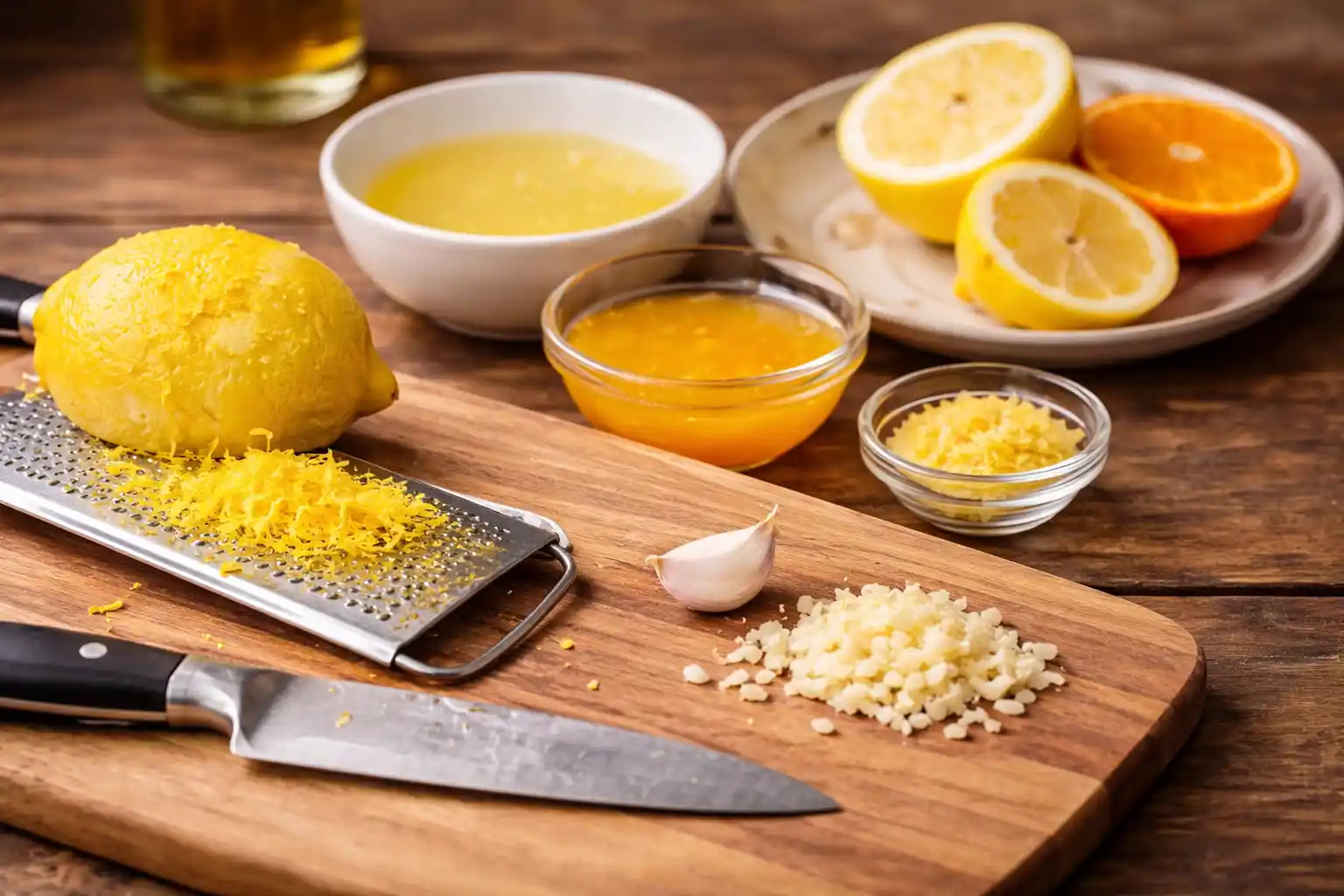
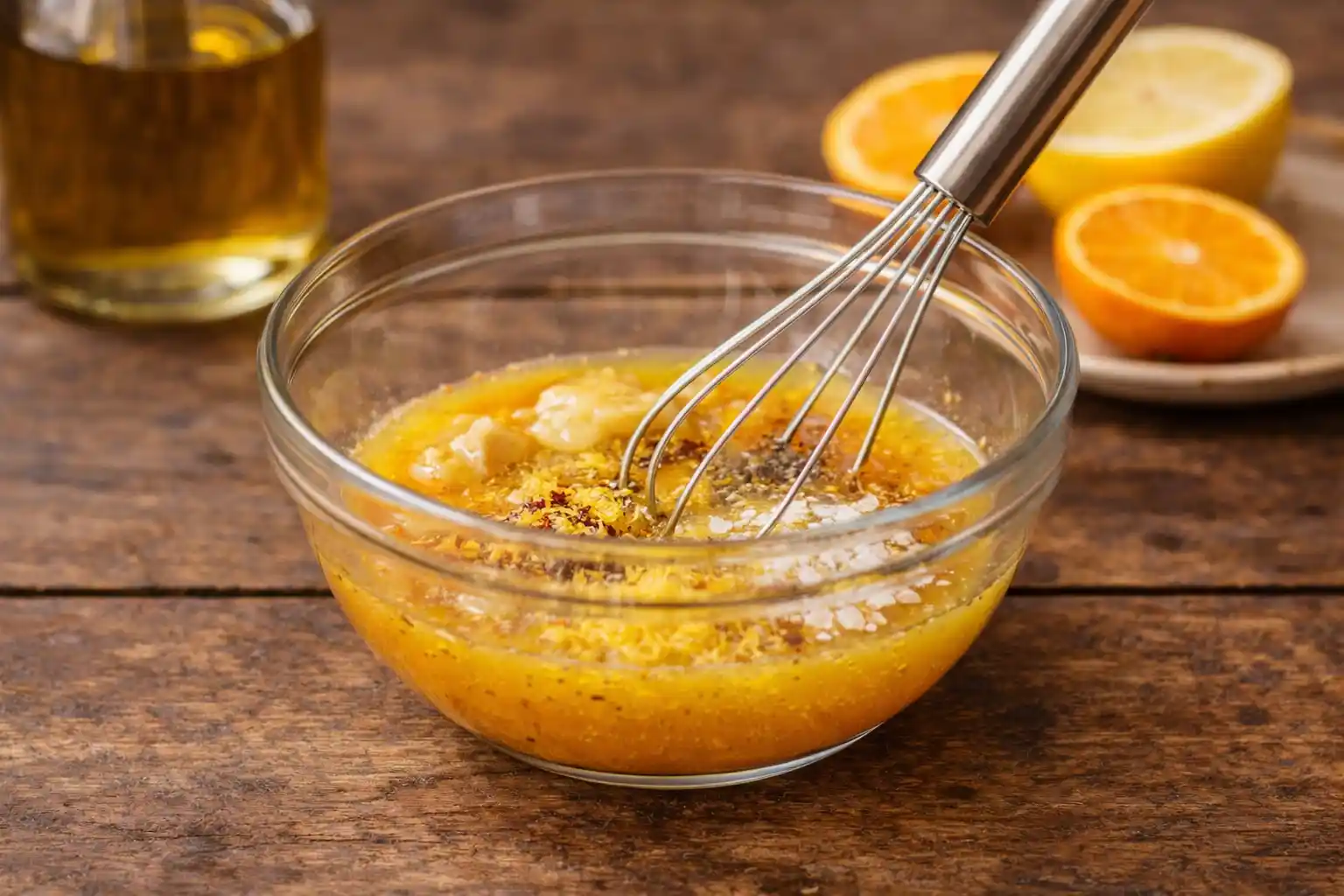
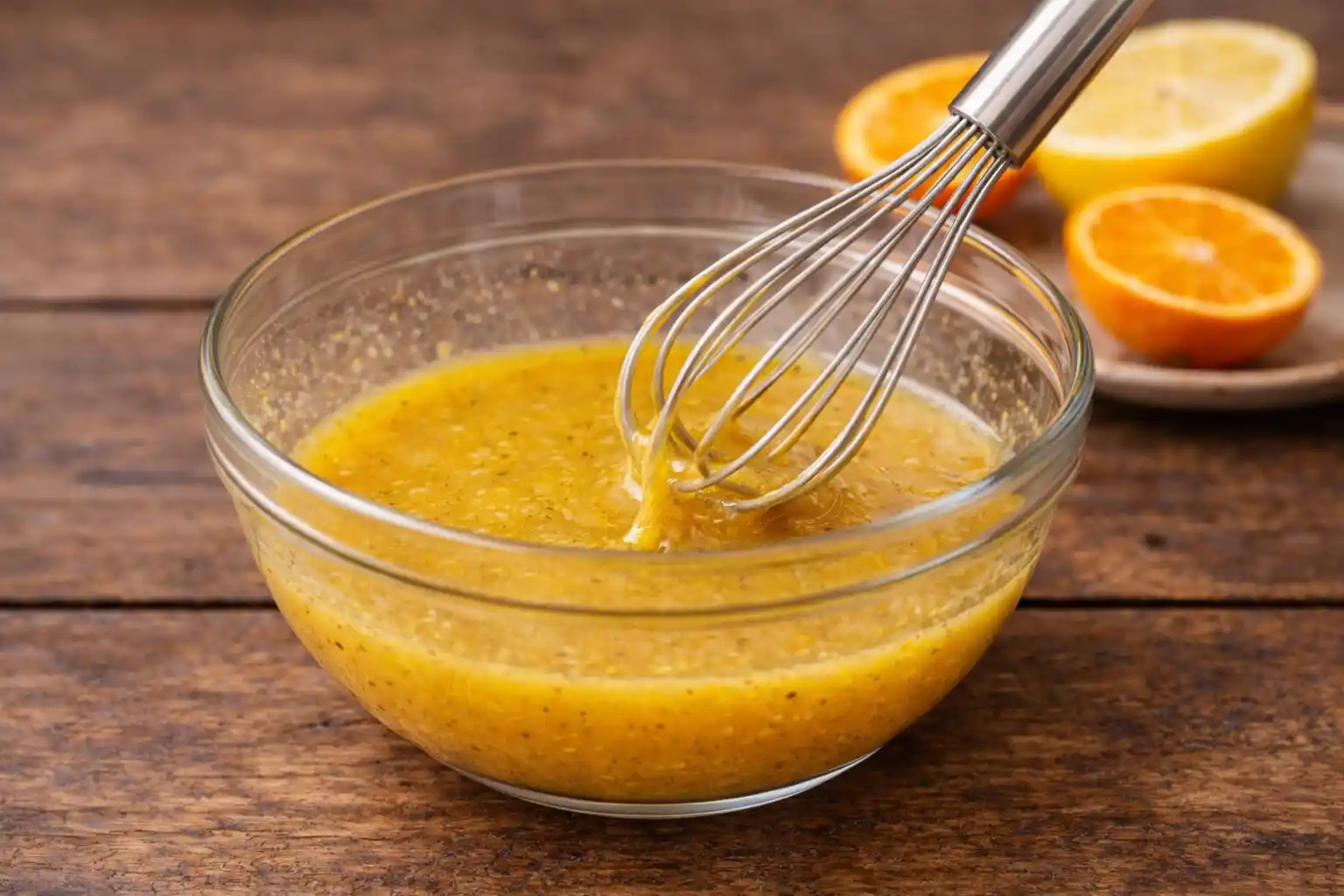
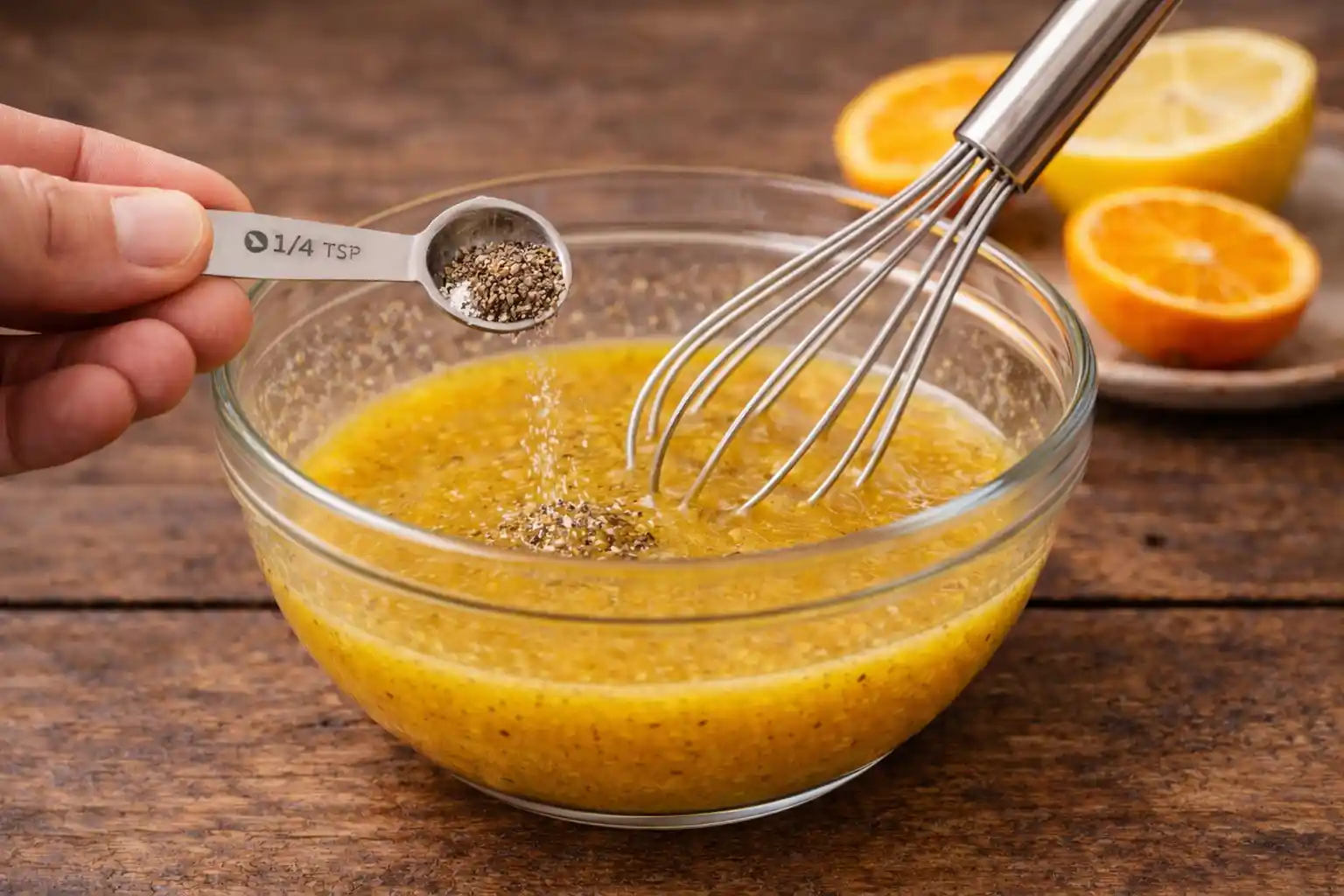
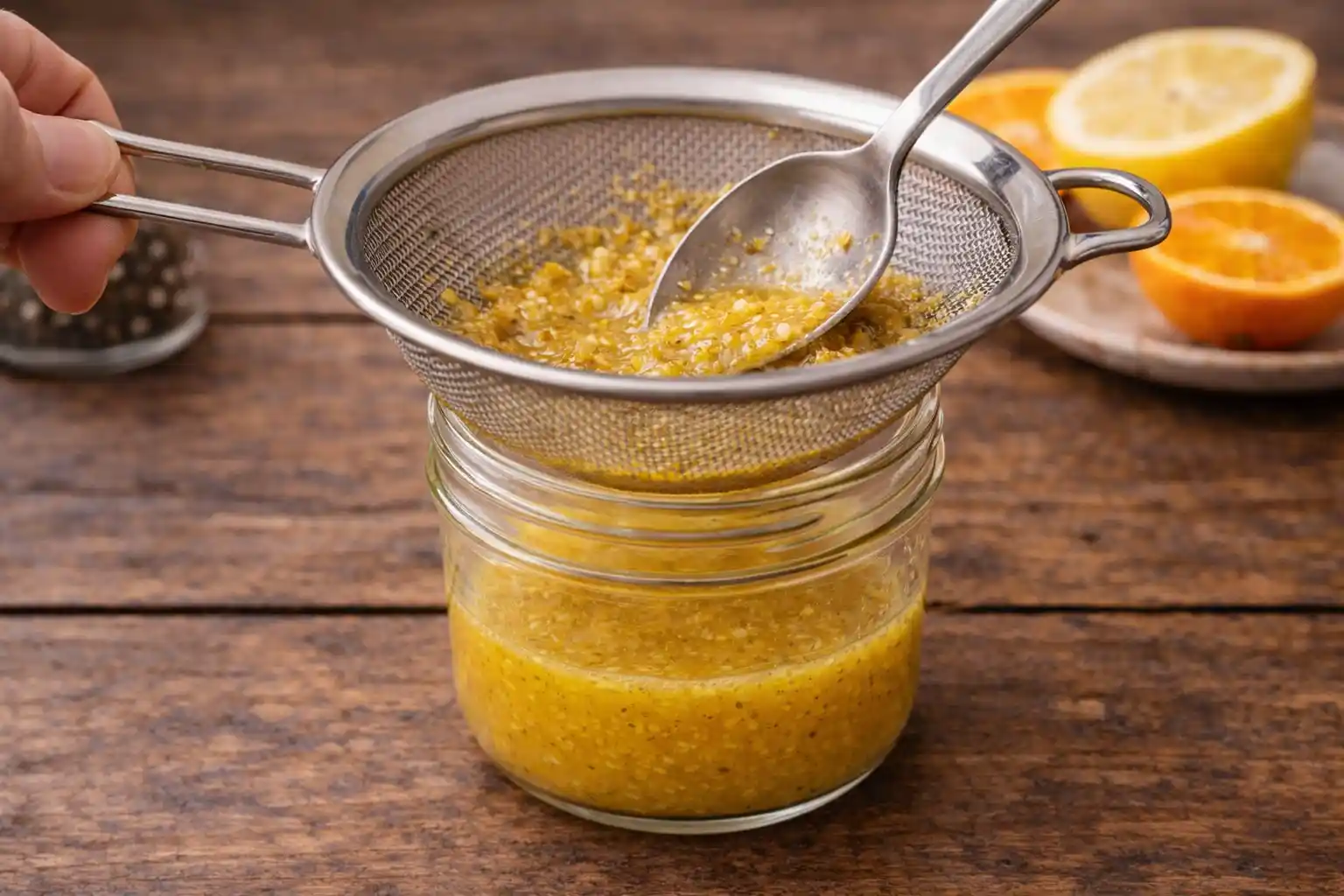
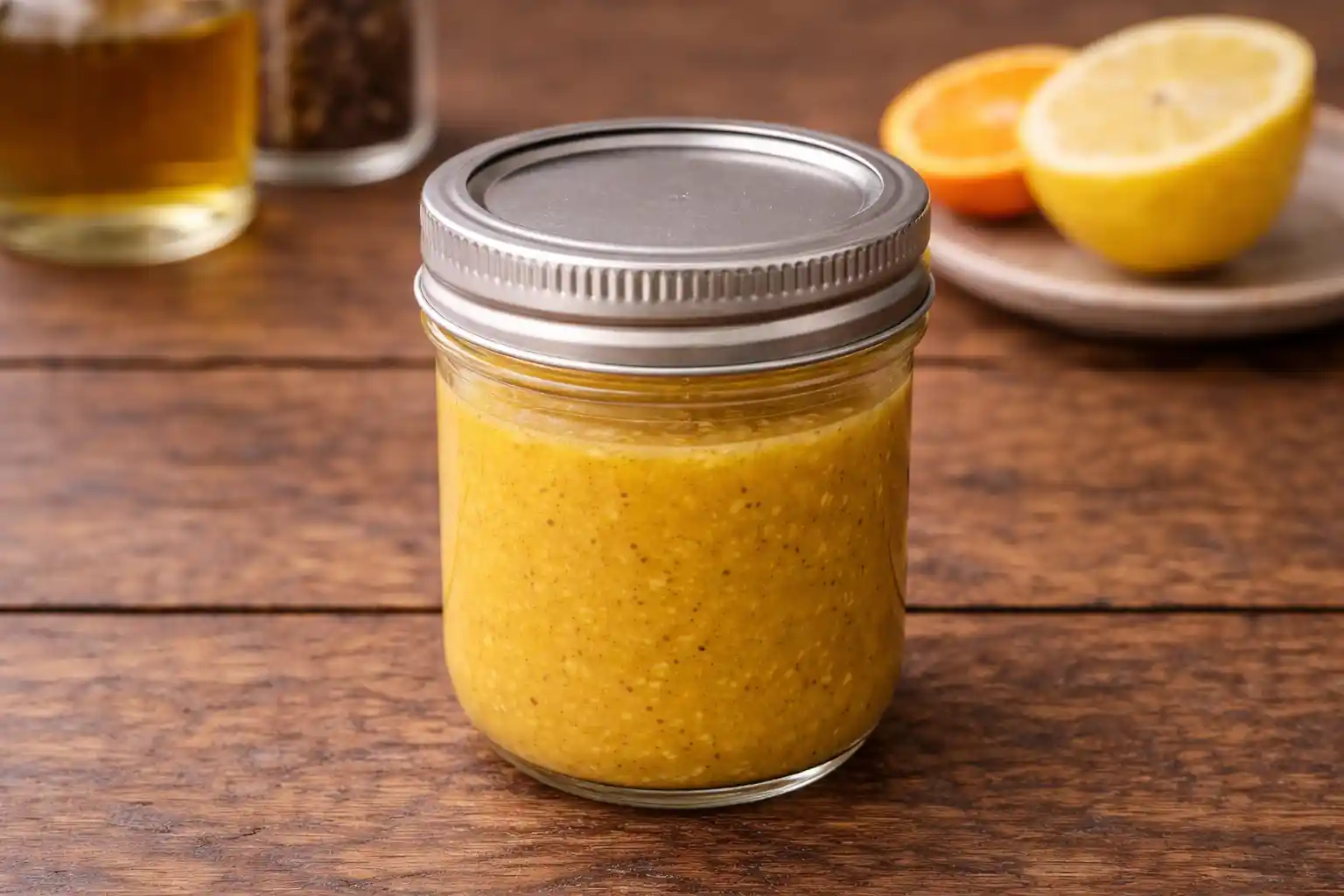
This lemon citrus vinaigrette recipe blends fresh lemon and a touch of orange for layered citrus brightness, mustard for stable emulsification, and extra-virgin olive oil for a silky mouthfeel. Aromatic citrus zest and garlic add depth, while a small sweetener rounds the acid. a versatile, vibrant dressing that lifts salads, vegetables, and seafood without overpowering them.
What Is Lemon Citrus Vinaigrette?
A no-cook, emulsified vinaigrette made from fresh lemon juice, citrus accents, mustard paste, olive oil, and a touch of sweetener to balance acidity.
Usage:
Use as a finishing dressing for green salads, grain bowls, and vegetables; as a light marinade for fish or chicken. Or as a sauce component for composed plates. Suitable year-round and especially bright in spring and summer produce seasons.
Serving:
Serve at room temperature. Drizzle over salads just before serving, toss warm roasted vegetables gently to preserve texture, or brush lightly on grilled proteins immediately before plating.
Storage & Reheating:
- Refrigeration: Store in an airtight container up to 7 days.
- Freezing: Not recommended. The emulsion will separate, and the texture will be ruined.
- Reheating: Not applicable. Bring refrigerated dressing to room temperature and re-emulsify by whisking or shaking.
- Make-Ahead: Can be made 3-5 days ahead. Refrigerate and re-whisk or shake before use.
Chef’s Tips & Techniques:
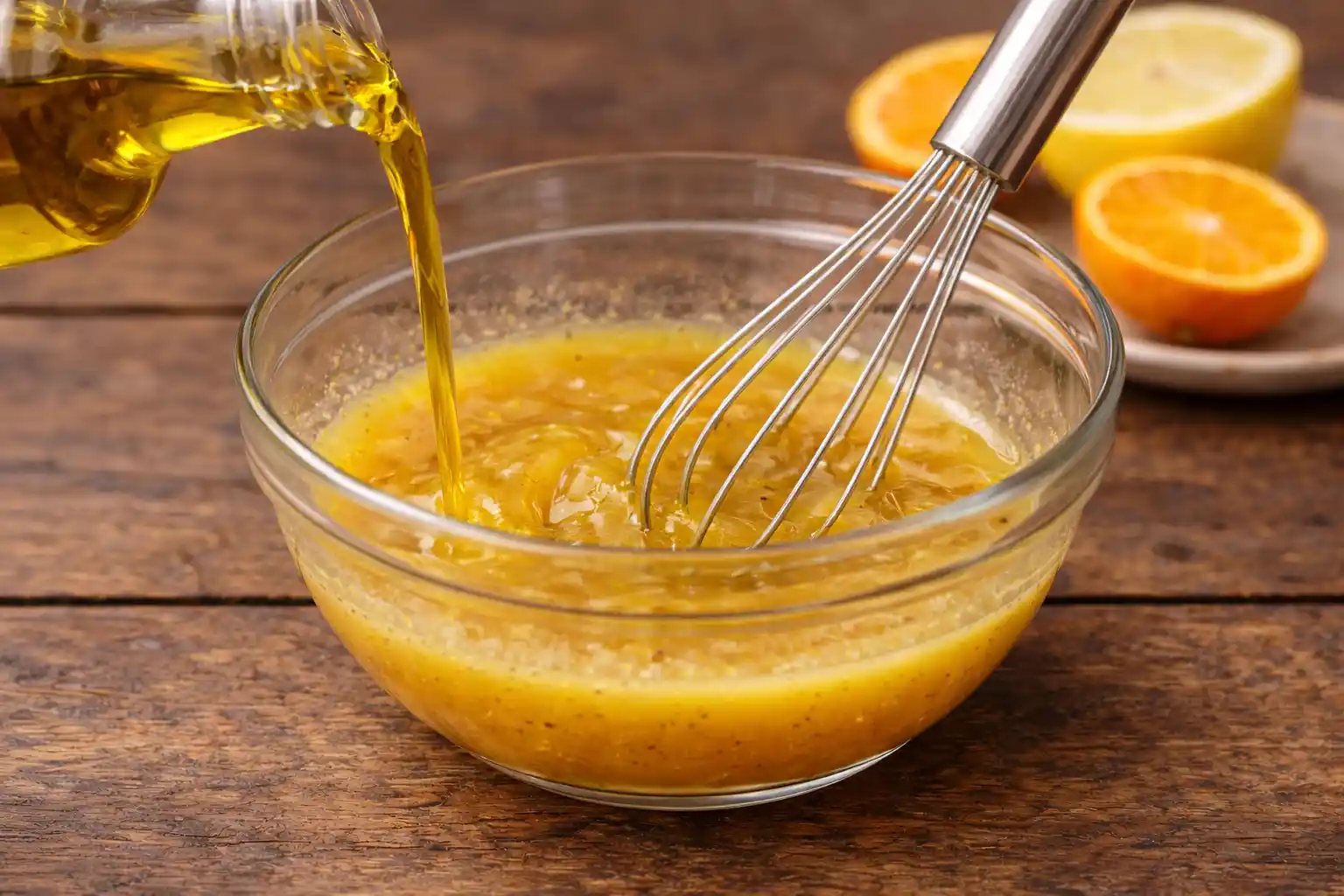
- Emulsify properly: Whisk mustard and acid first, then add oil in a slow, steady stream while whisking to form a stable emulsion.
- Temperature cue: If ingredients are very cold, the emulsion will thicken less readily; use room-temperature oil and lemon juice for best results.
- Stability trick: A small amount of mustard stabilizes the emulsion. An immersion blender will produce an exceptionally glossy, long-lasting emulsion.
- Season gradually: Salt tightens flavors; add in stages and taste after a short rest.
- Don’t over-sweeten: sweetener should round acidity, not dominate it, and add in small increments.
Variations & Substitutions:
- Oil: Substitute light-tasting avocado oil or neutral grapeseed oil. The flavor will be less olive-forward.
- Mustard-free: Omit mustard for a thinner dressing. Expect faster separation. Use 1 teaspoon of aquafaba or 1/2 teaspoon of lecithin for a vegan stabilizer if needed.
- Sweetener: Swap honey for maple syrup or agave (maple lends an earthier note). Honey is not vegan.
- Citrus swap: Replace up to half the lemon juice with orange or lime for softer or sharper acidity, respectively.
- Herbed version: Stir in 1 tablespoon of finely chopped parsley, chives, or tarragon after emulsifying.
- Lower-oil option: Reduce oil to 4 tablespoons and substitute 2 tablespoons plain Greek yogurt for creaminess; emulsion and shelf life will change; store for 3 days.
Essentials:
- Measuring cups and spoons
- Microplane or fine grater (for zest)
- Citrus juicer (recommended)
- Small mixing bowl or mason jar with lid
- Whisk or immersion blender/small food processor (optional for faster emulsification)
- A spoon and a small spatula