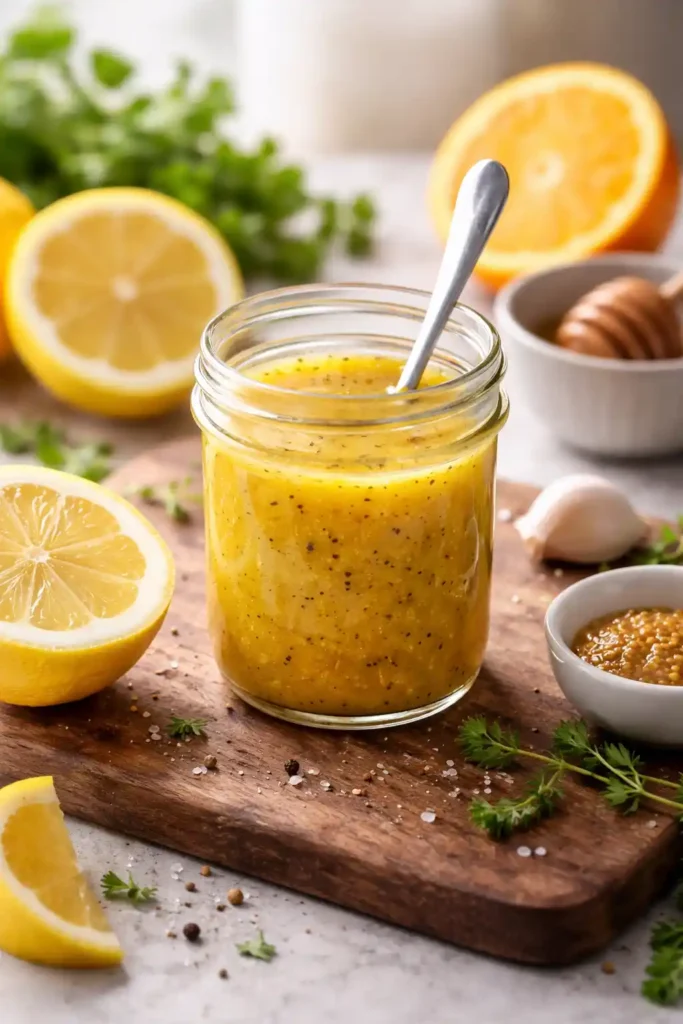

This lemon citrus vinaigrette recipe blends fresh lemon and a touch of orange for layered citrus brightness, mustard for stable emulsification, and extra-virgin olive oil for a silky mouthfeel. Aromatic citrus zest and garlic add depth, while a small sweetener rounds the acid. a versatile, vibrant dressing that lifts salads, vegetables, and seafood without overpowering them.
What Is Lemon Citrus Vinaigrette?
A no-cook, emulsified vinaigrette made from fresh lemon juice, citrus accents, mustard paste, olive oil, and a touch of sweetener to balance acidity.
Usage:
Use as a finishing dressing for green salads, grain bowls, and vegetables; as a light marinade for fish or chicken. Or as a sauce component for composed plates. Suitable year-round and especially bright in spring and summer produce seasons.
Serving:
Serve at room temperature. Drizzle over salads just before serving, toss warm roasted vegetables gently to preserve texture, or brush lightly on grilled proteins immediately before plating.
Storage & Reheating:
- Refrigeration: Store in an airtight container up to 7 days.
- Freezing: Not recommended. The emulsion will separate, and the texture will be ruined.
- Reheating: Not applicable. Bring refrigerated dressing to room temperature and re-emulsify by whisking or shaking.
- Make-Ahead: Can be made 3-5 days ahead. Refrigerate and re-whisk or shake before use.
Chef’s Tips & Techniques:
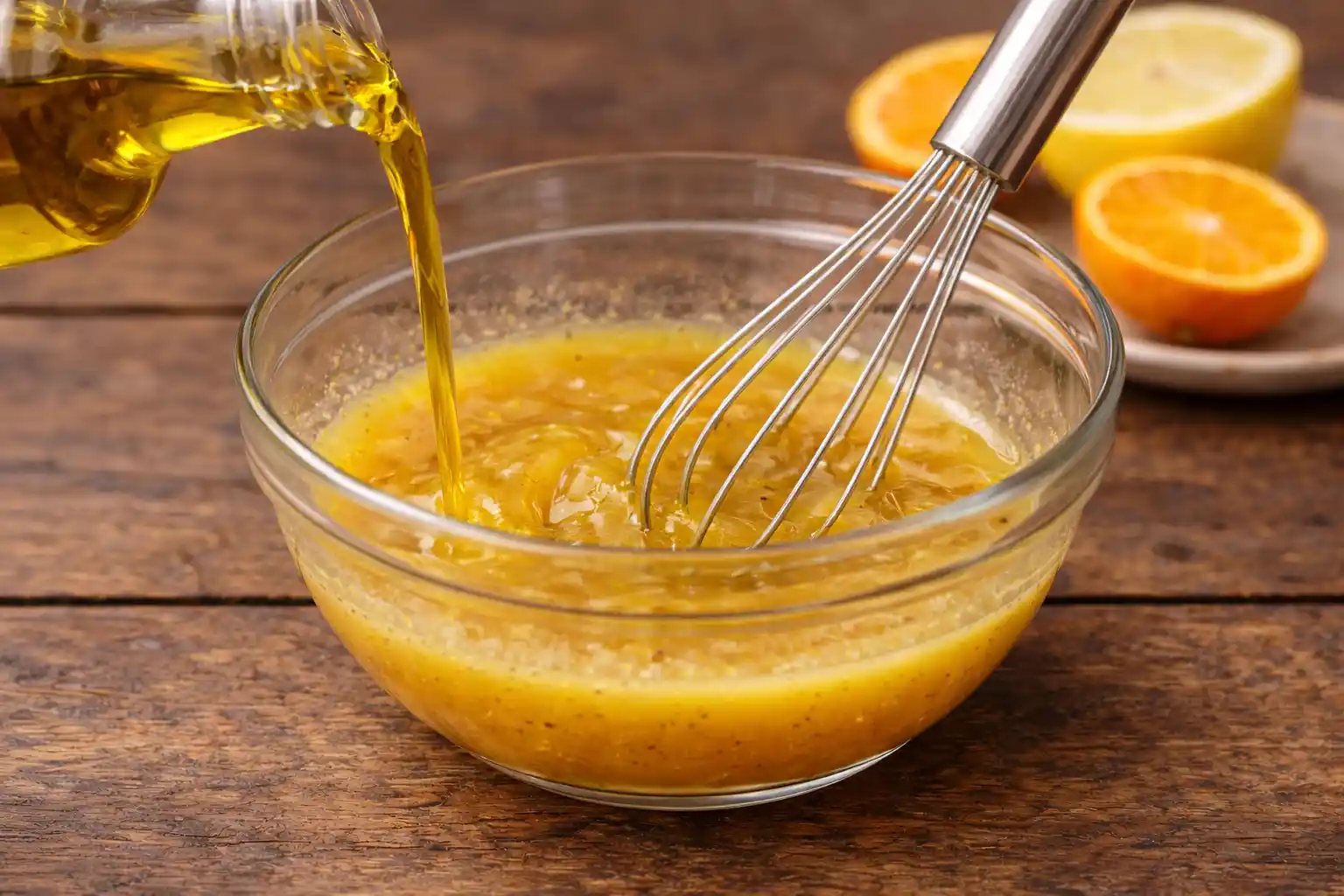
- Emulsify properly: Whisk mustard and acid first, then add oil in a slow, steady stream while whisking to form a stable emulsion.
- Temperature cue: If ingredients are very cold, the emulsion will thicken less readily; use room-temperature oil and lemon juice for best results.
- Stability trick: A small amount of mustard stabilizes the emulsion. An immersion blender will produce an exceptionally glossy, long-lasting emulsion.
- Season gradually: Salt tightens flavors; add in stages and taste after a short rest.
- Don’t over-sweeten: sweetener should round acidity, not dominate it, and add in small increments.
Variations & Substitutions:
- Oil: Substitute light-tasting avocado oil or neutral grapeseed oil. The flavor will be less olive-forward.
- Mustard-free: Omit mustard for a thinner dressing. Expect faster separation. Use 1 teaspoon of aquafaba or 1/2 teaspoon of lecithin for a vegan stabilizer if needed.
- Sweetener: Swap honey for maple syrup or agave (maple lends an earthier note). Honey is not vegan.
- Citrus swap: Replace up to half the lemon juice with orange or lime for softer or sharper acidity, respectively.
- Herbed version: Stir in 1 tablespoon of finely chopped parsley, chives, or tarragon after emulsifying.
- Lower-oil option: Reduce oil to 4 tablespoons and substitute 2 tablespoons plain Greek yogurt for creaminess; emulsion and shelf life will change; store for 3 days.
Essentials:
- Measuring cups and spoons
- Microplane or fine grater (for zest)
- Citrus juicer (recommended)
- Small mixing bowl or mason jar with lid
- Whisk or immersion blender/small food processor (optional for faster emulsification)
- A spoon and a small spatula
Fresh & Delicious Lemon Citrus Vinaigrette Recipe
This lemon citrus vinaigrette has bright acidity and subtle sweetness. This recipe can be made in 10 minutes and can be adjusted for oil or sweetness.
Versatile for salads, grain bowls, vegetables, and as a light marinade.
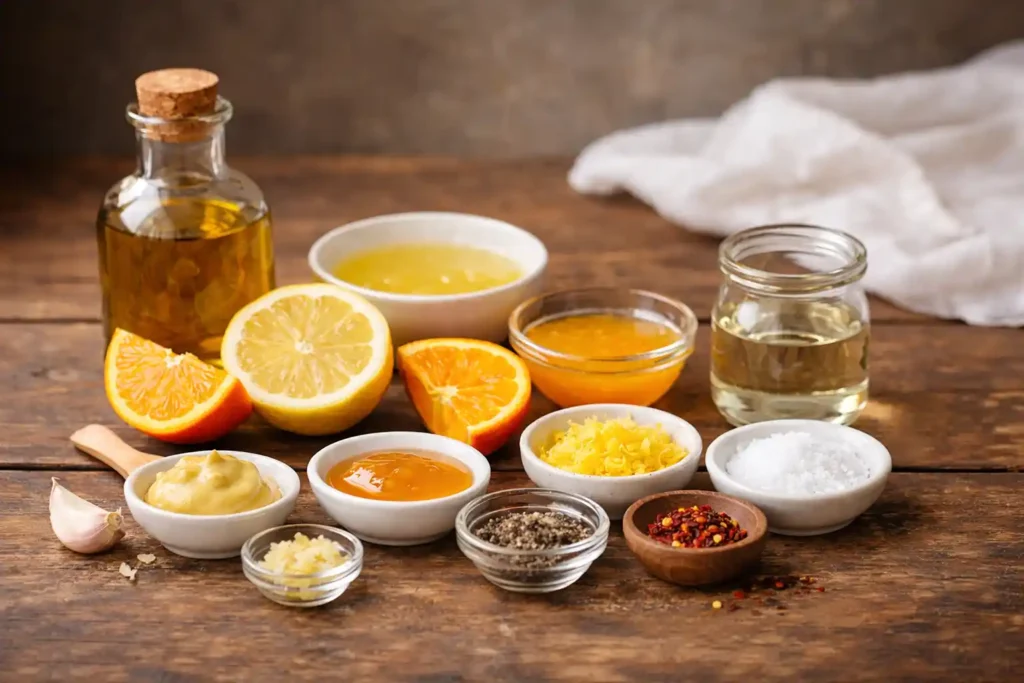
Ingredients : Lemon Citrus Vinaigrette
Step by Step Instructions:
-
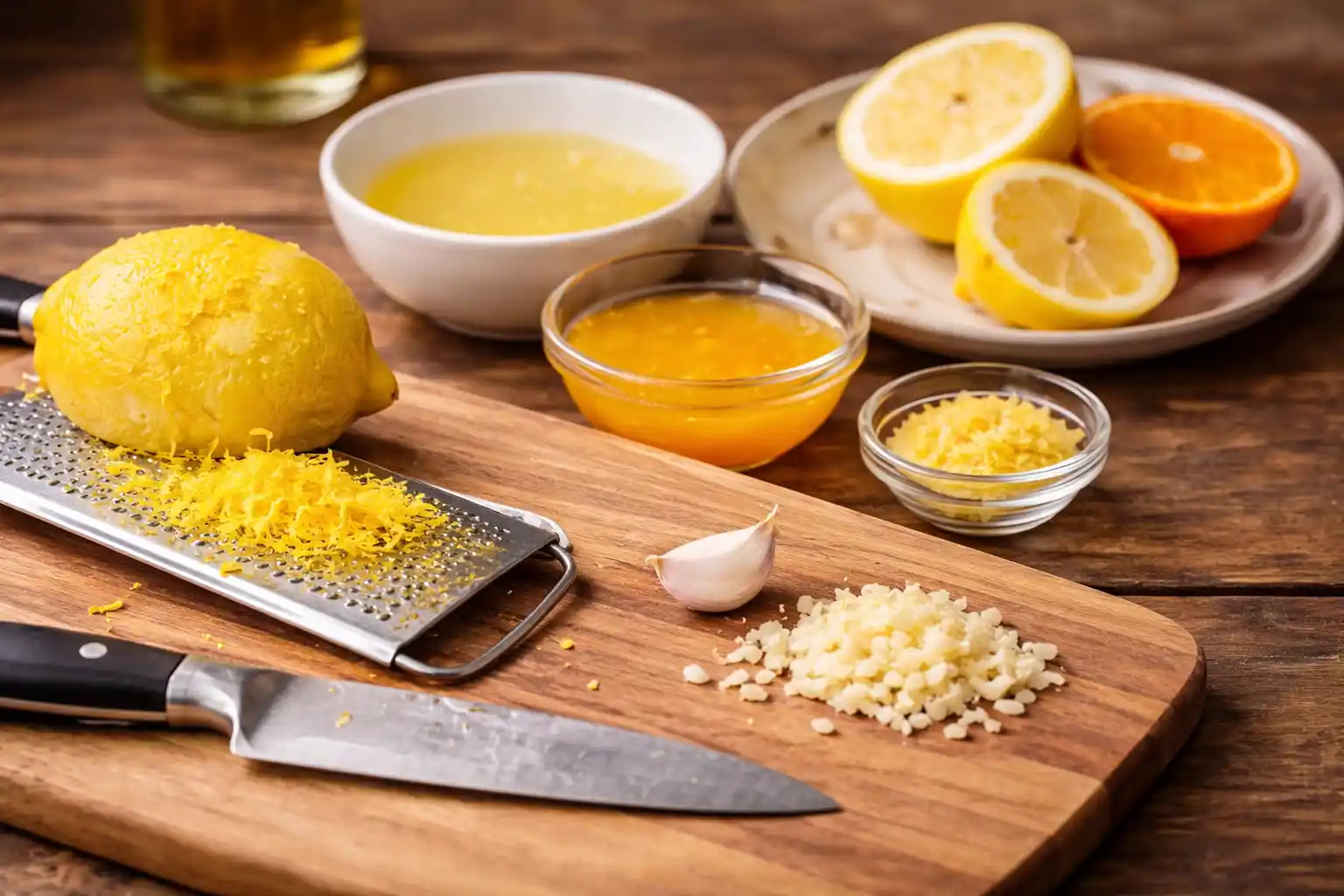
Prep Citrus and Aromatics:
Zest one lemon, then juice the lemons and the orange. Finely mince the garlic. Measure all ingredients before starting.
-
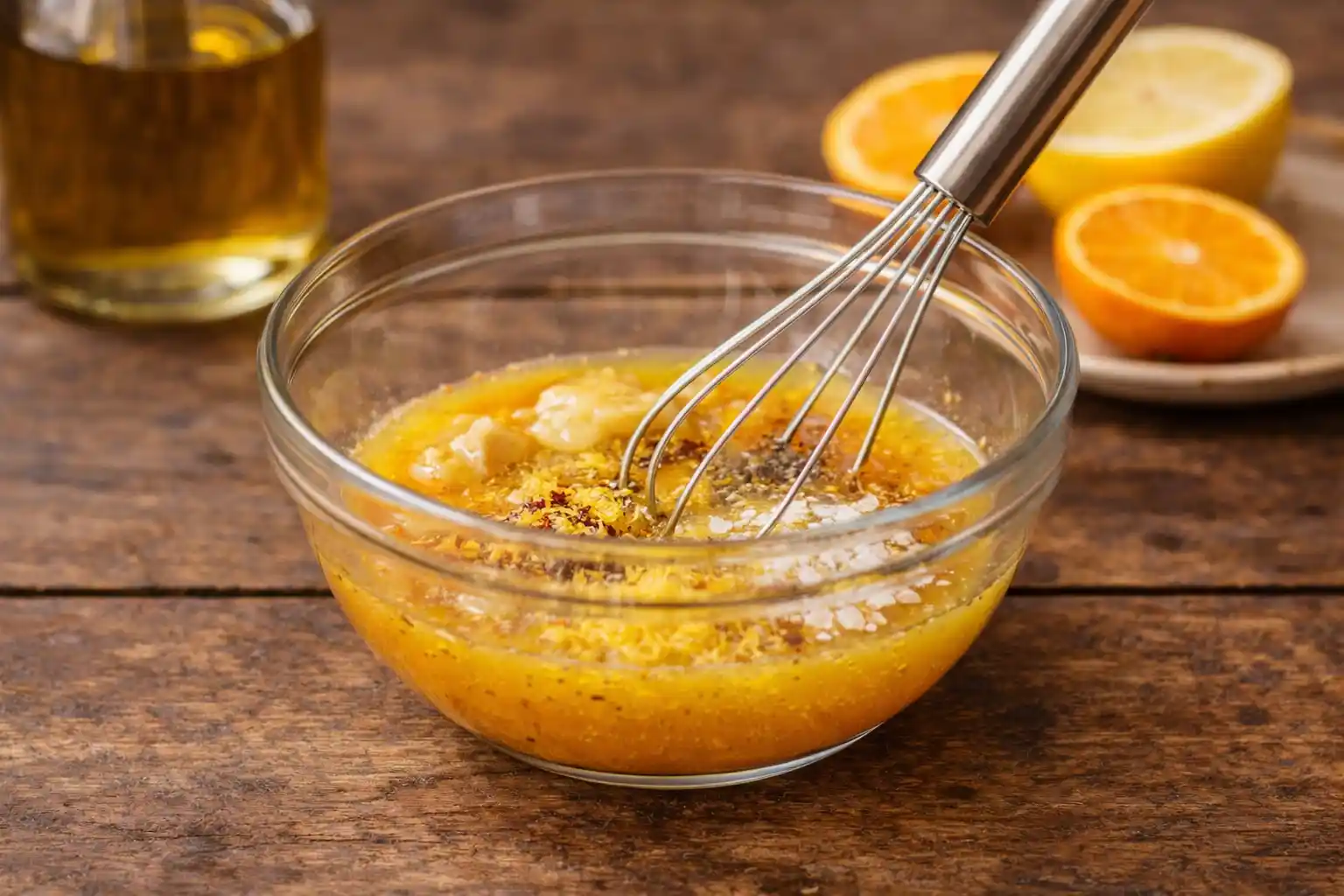
Combine Acids and Mustard:
In a small mixing bowl or jar, add lemon juice, orange juice, white wine vinegar, mustard, honey (or maple), minced garlic, lemon zest, salt, and pepper. Whisk briefly until uniform.
-
Begin Emulsification:
If whisking by hand, hold the bowl steady. Continue whisking vigorously while adding the olive oil in a slow, steady, thin stream. If using a jar, add oil, close the lid, and shake vigorously while adding oil.
-
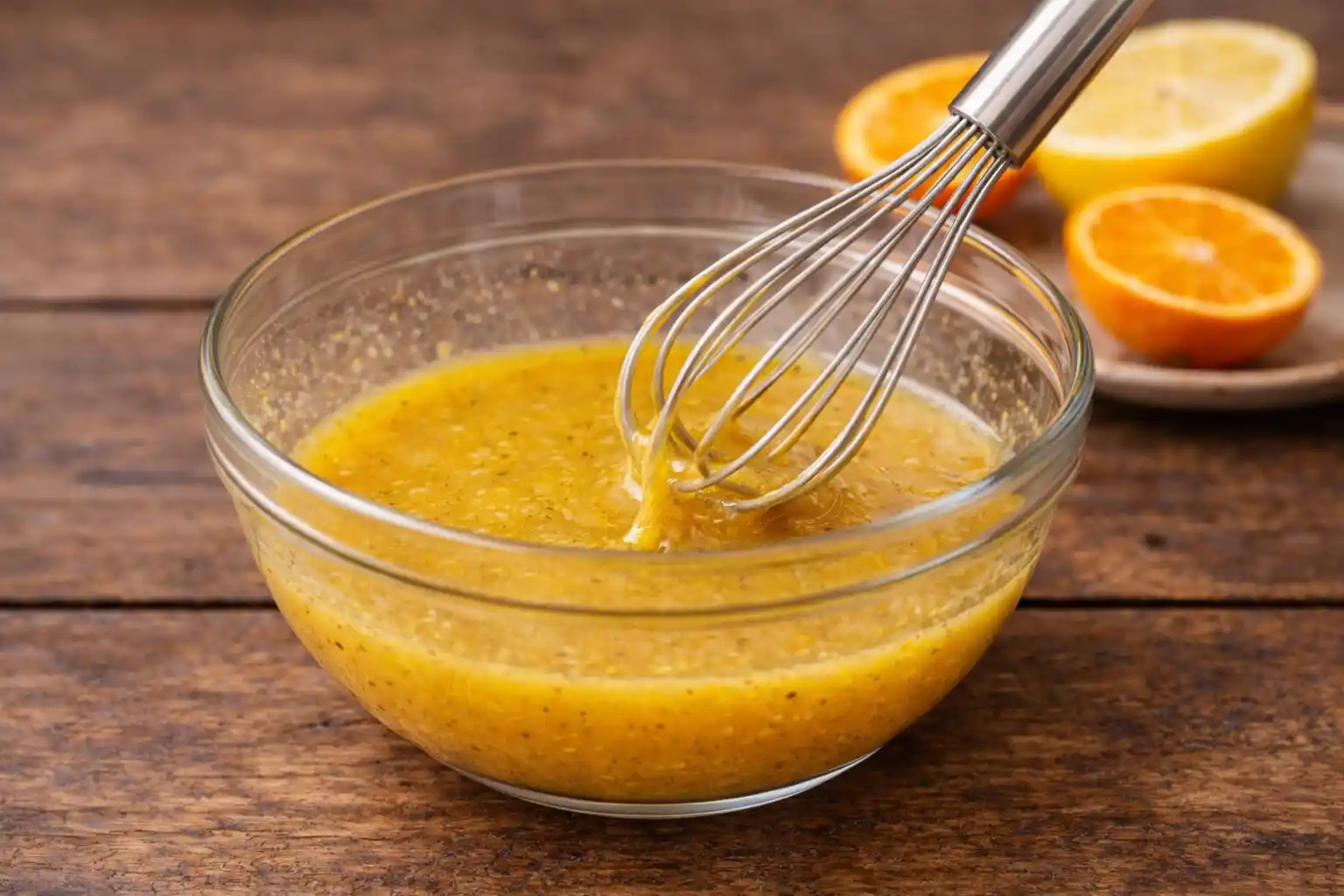
Finish Emulsification:
Whisk or shake until the dressing becomes slightly thickened and glossy. If using an immersion blender or small processor, pulse for 5–10 seconds until smooth.
-
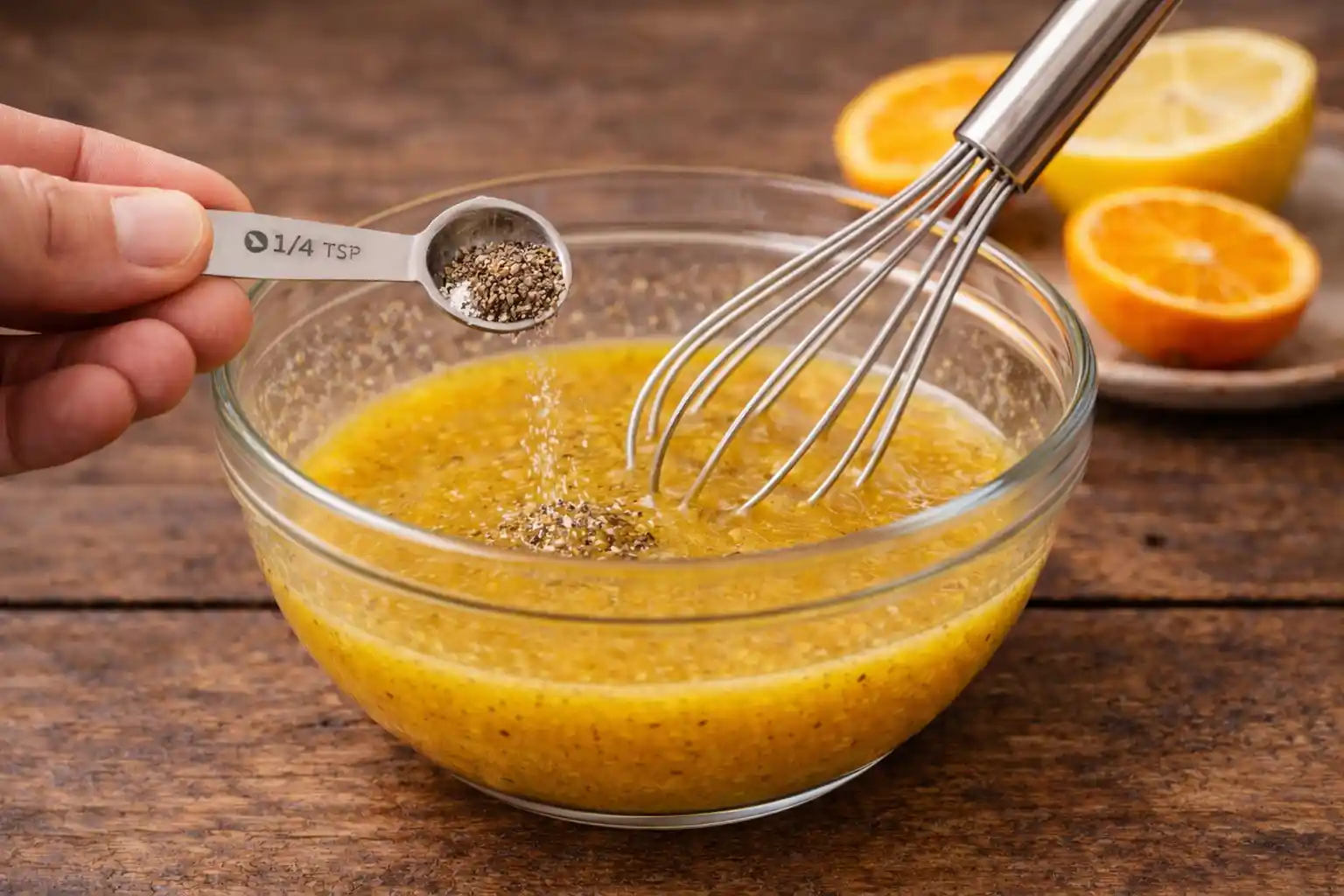
Taste and Adjust:
Taste the dressing. Adjust salt, pepper, or sweetener in ¼ tsp increments to balance acidity. If too sharp, add ½ tsp honey/maple or 1 tsp olive oil and re-emulsify.
-
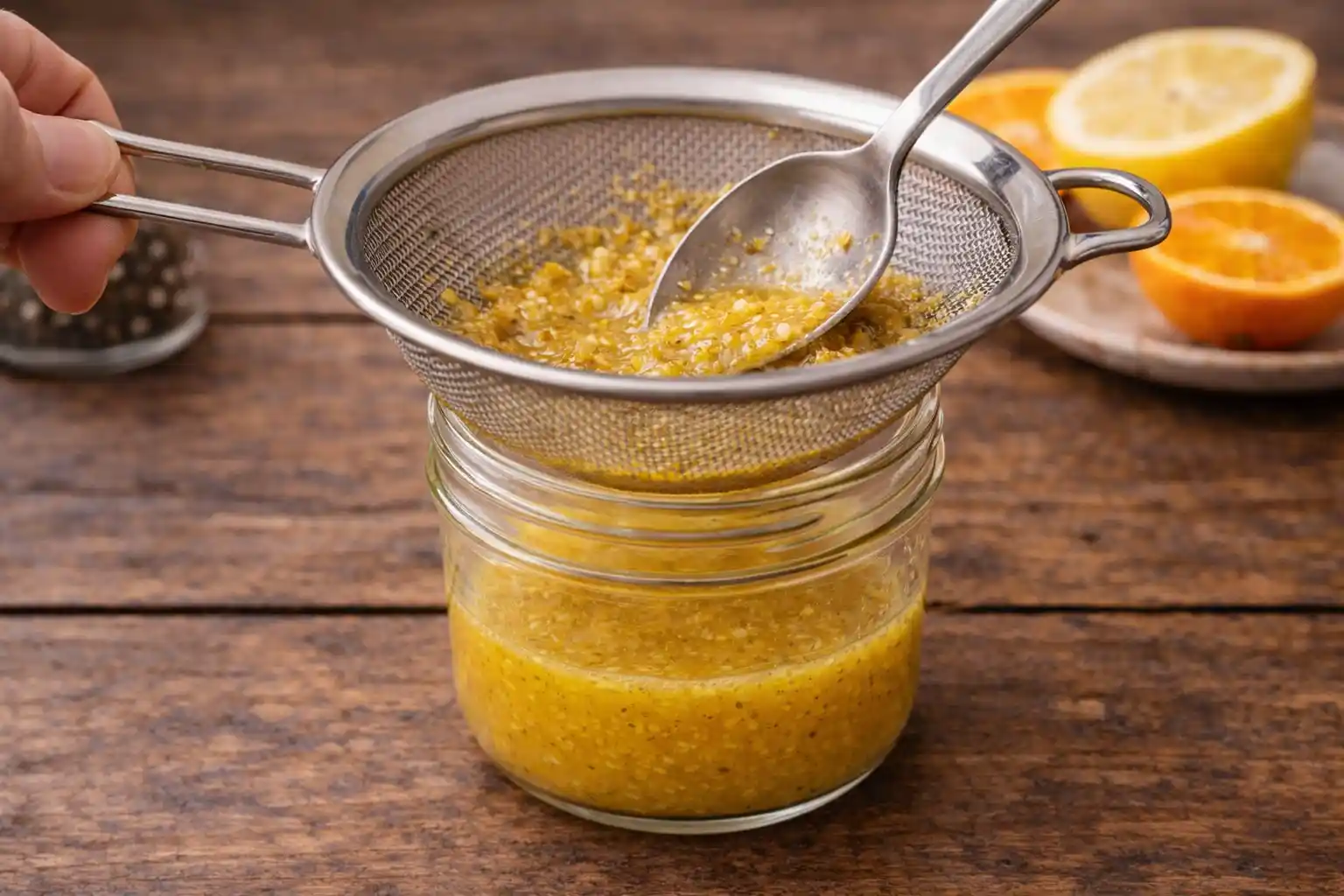
Strain(Optional):
For an ultra-smooth dressing, pass through a fine-mesh sieve into a clean container to remove garlic solids and zest bits.
-
Store and Serve:
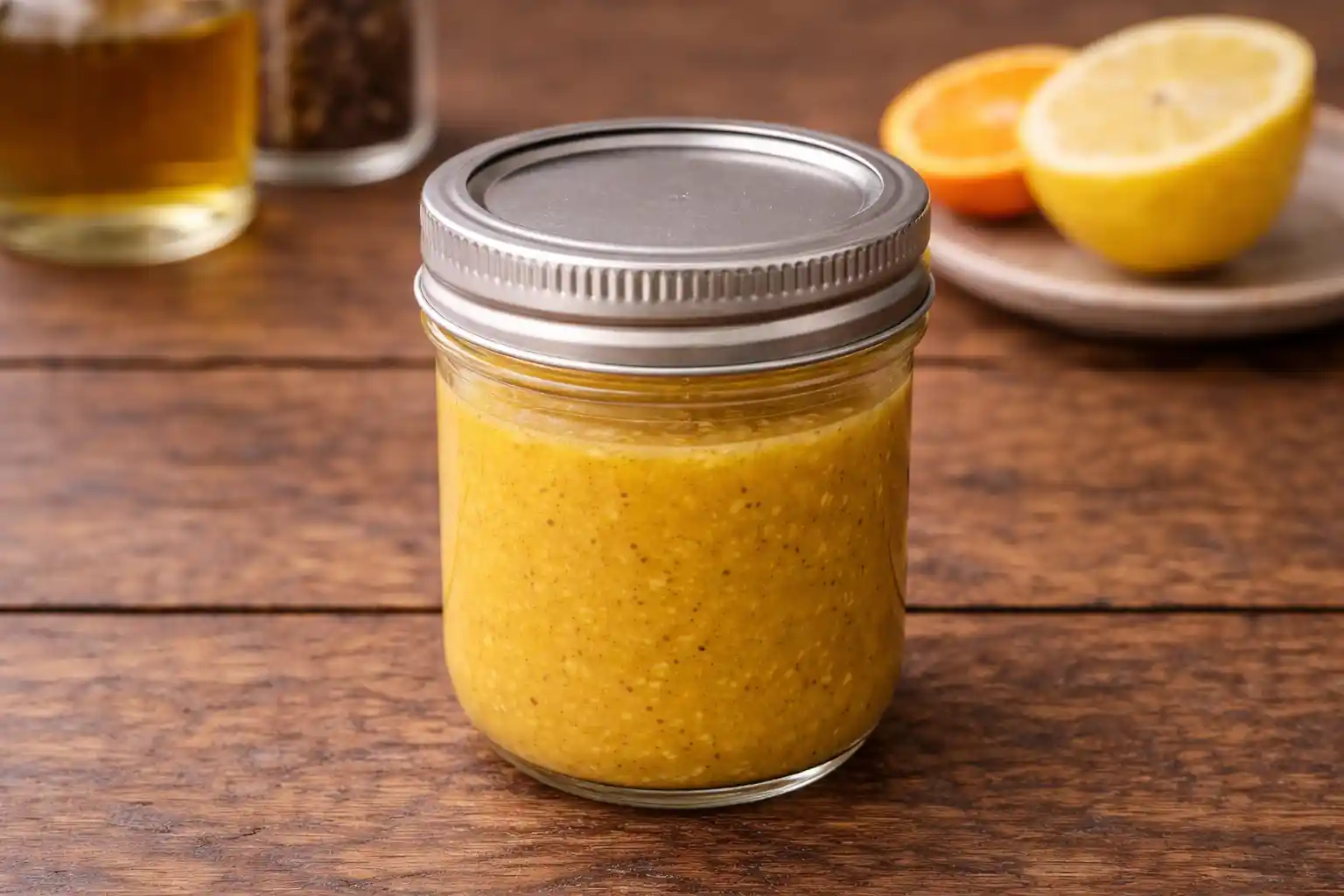
Transfer to an airtight jar. Refrigerate until needed. Bring to cool room temperature and re-shake or whisk before serving to re-emulsify.
Nutrition Facts
Servings 1
- Amount Per Serving
- Calories 100kcal
- % Daily Value *
- Total Fat 10g16%
- Saturated Fat 1.4g7%
- Sodium 72mg3%
- Total Carbohydrate 1.2g1%
- Sugars 1g
* Percent Daily Values are based on a 2,000 calorie diet. Your daily value may be higher or lower depending on your calorie needs.
Note
- Label refrigerated dressing with date prepared and use within 7 days.
- Re-emulsify by shaking or whisking if separation occurs.
- Adjust oil-to-acid ratio to preference: a 3:1 oil-to-acid ratio yields a milder dressing, 2:1 is brighter.